Articles
Children’s Room Interior Design: Key Features and Tips
Learn how to create a safe, functional, and personalized children’s room interior that meets technical requirements and the child’s preferences.

Articles
Learn how to create a safe, functional, and personalized children’s room interior that meets technical requirements and the child’s preferences.
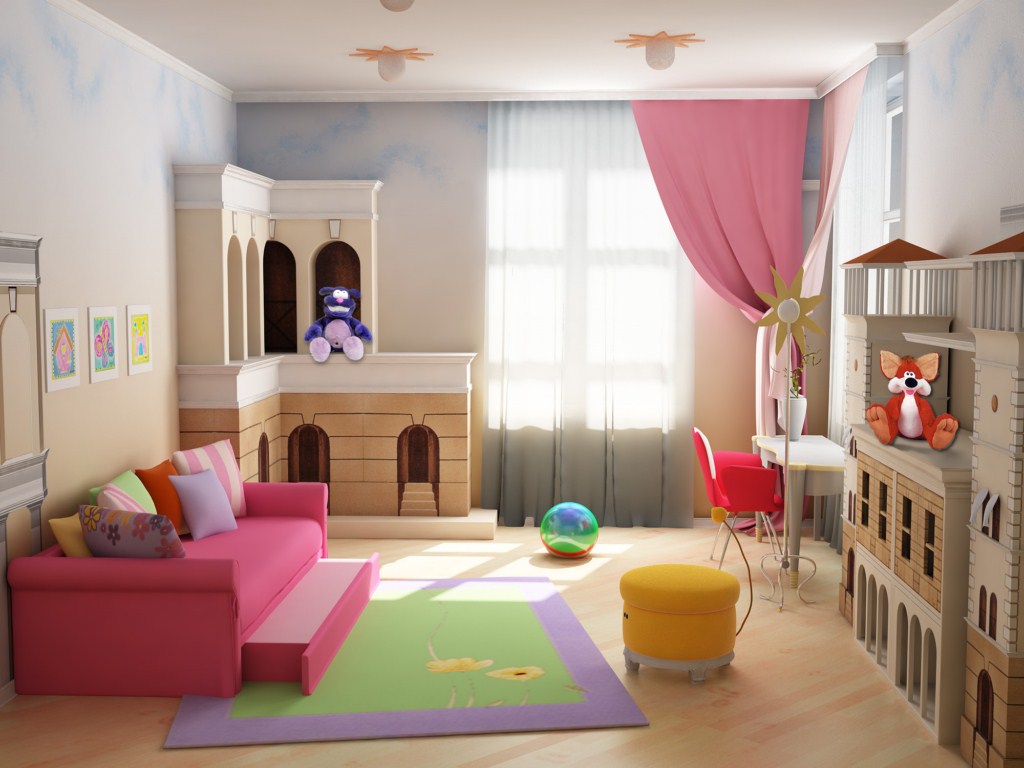
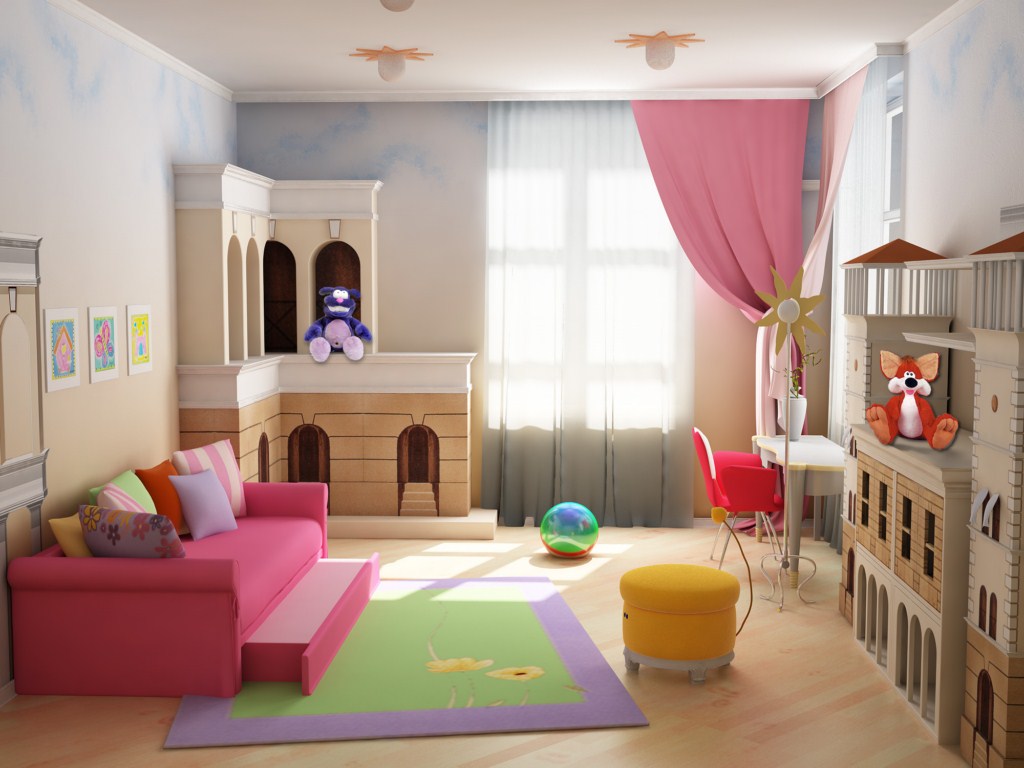
A child places great importance on having a personal space, so the interior of a children’s room must be special, individual, and memorable. Every parent who decides to renovate their child’s haven knows the child’s preferences and wishes, and those should guide the design. The child spends almost all of their time inside the room—playing, sleeping, developing—so it can be considered a separate world.
The design of this living space determines how cozy and safe the environment will be. Approaching the interior of a children’s room differs significantly from working with other types of spaces. Here, the emphasis is on using eco‑friendly, safe materials, carefully selecting color schemes that foster a favorable atmosphere for the child’s mental development. To properly arrange a children’s room interior, you must consider the owner’s wishes alongside all technical requirements. For example, the design can be based on the child’s favorite fairy tale. Girls often imitate their mothers, so a princess‑themed room can feature a beautiful, delicate vanity with a mirror.
When working on the layout, remember to meet every need of the child, as this is where they will receive guests, sleep, play, and explore the world. Therefore, zoning the room is advisable.
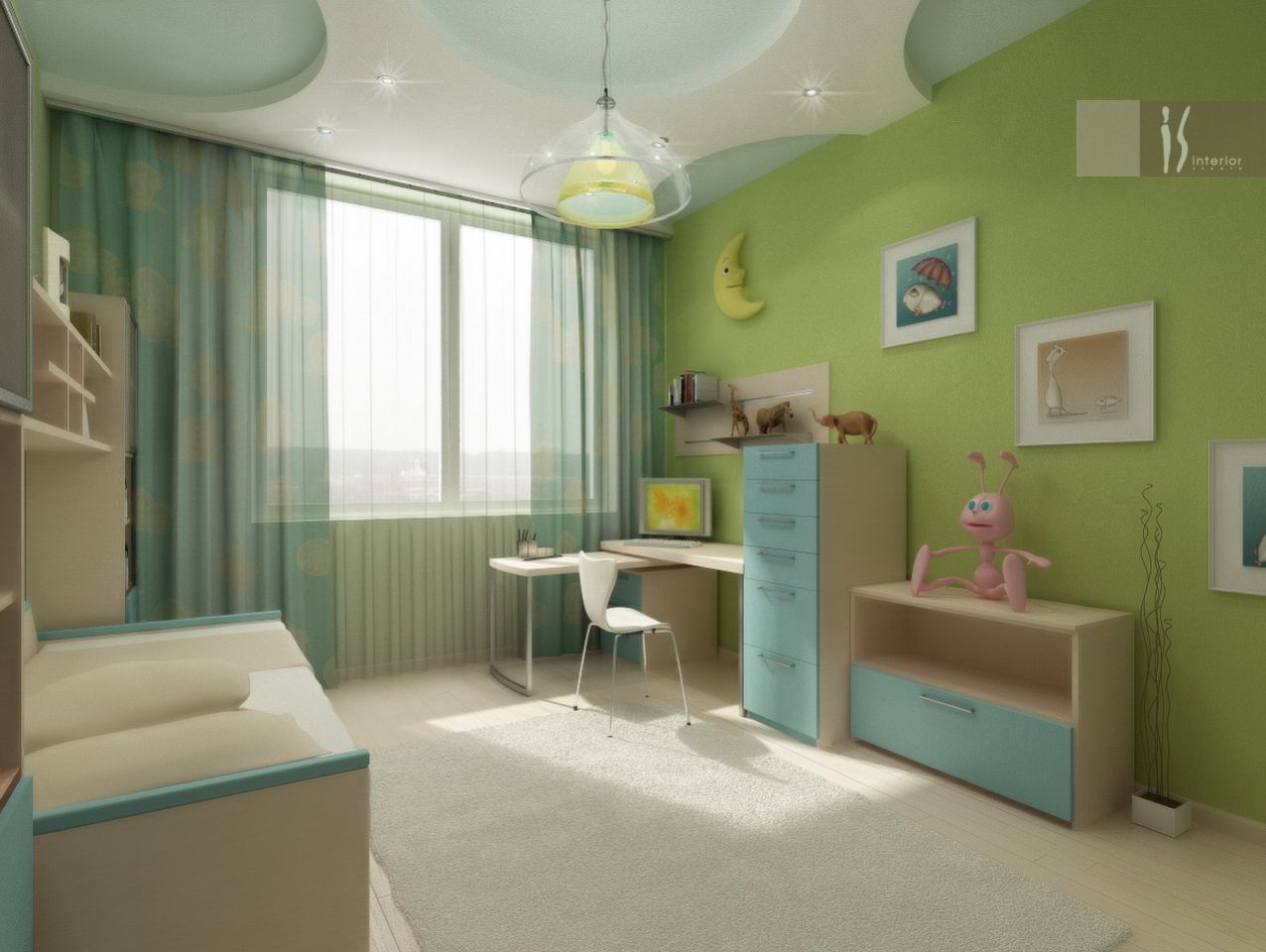
To make the living area functional and ergonomic, it should be divided into several zones, each serving a specific purpose. Even a modest nine‑square‑meter room should be zoned into:
Before planning the children’s room interior, understand how to separate one spatial unit from another without using solid partitions. An interesting option is zoning with wallpaper. This design trick is especially relevant for a room shared by two or more children, although the play zone will remain common.
A single child’s room is the easiest to arrange. For instance, place a study desk in a corner, with functional shelves above it for books and school supplies. The resting zone, where the child sleeps, should be styled according to the child’s gender. Girls love canopy beds, while boys often prefer beds shaped like cars or pirate ships. Hence, involve the child in choosing the interior design.
The play area is usually located in the center of the room. Since children love to be on the floor, cover this zone with a carpet. Also consider adding drawers or a basket for toy storage.
First, parents must ensure the child receives enough natural light. Therefore, it is recommended that the children’s room’s windows face southeast or east. This orientation aligns the indoor rhythm with nature: in the morning the space fills with bright sunrise rays, and in the evening a gentle dimness settles inside.
Such a scheme improves the child’s well‑being and nervous system health. If the rule is followed, artificial lighting plays a minimal role, which is especially important for the development of the younger generation. Nevertheless, a children’s room cannot be designed without any lighting. Follow these simple rules:
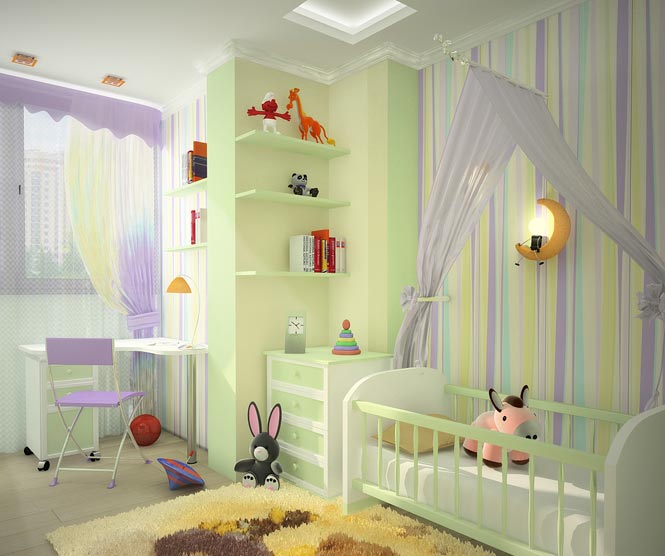
Furniture bought for a children’s room should serve comfort first. Choose pieces that are attractive, functional, and practical. Ideal furniture possesses the following qualities:
Parents should understand that a children’s room interior will need to be refreshed several times as the child grows, so the furniture will change as well. Children feel comfortable only in an environment where the furnishings match their size, meaning the furniture should grow with the child.
New items may appear as interests expand. For example, a sporty boy will need a dedicated storage compartment for his equipment. Furniture should not clash with the overall design concept.
Many parents tend to overload a children’s room with innovative gadgets that kids cannot understand or use properly. The main rule is that the design must be as simple and clear as possible. A table with straightforward pull‑out drawers, an upward‑opening toy container, a swivel chair without buttons or levers—these elements are perfect for creating comfort inside the room.
Generally, it is not advisable to complicate the interior with ceiling‑mounted structures; all cabinets should open easily in one motion. While some advanced children may intuitively handle complex mechanisms, most cannot. Therefore, opt for furniture with simple, intuitive construction.
Comments