Articles
Choosing the Best Material for Building a House: Inert vs Non‑Inert Options
Explore how building materials are classified, compare inert and non‑inert options, and decide which house type offers the best economic efficiency.

Articles
Explore how building materials are classified, compare inert and non‑inert options, and decide which house type offers the best economic efficiency.
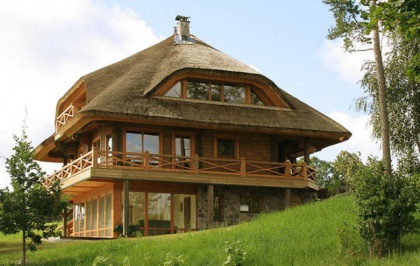
Today you can identify about twenty technologies that can be used for building country real estate, so every builder should know which house is best to construct. It is impossible to say unequivocally that one technology is the best and another is completely bad. Each has its own advantages and disadvantages. To decide which material to use for the structure and which construction type to choose, you need to define the main requirements set by the client for the future dwelling, because the interpretation of “the best home” varies from person to person.
There are two large groups of materials: inert and non‑inert. Inert walls have a higher thermal mass; they can store heat and then radiate it. If a builder lives in northern latitudes and wonders what to build a house from, this category deserves special attention. Heat radiation from such walls is emitted in the infrared range, so the interior stays warm even when the outside air temperature is low. Moreover, infrared heat is perceived by the body much better.
Non‑inert walls are a kind of “layer cake” made of various materials in different sequences. These materials have good or excellent thermal insulation properties but low thermal mass. The main distinguishing feature of this type of construction is that the walls themselves do not heat up; the air inside warms quickly and cools quickly as well. Therefore, before deciding what material is best for a house, you must understand that retaining heat is possible only if the building is made airtight.
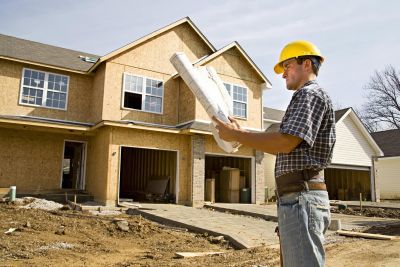
Walls of this kind can store heat and also release moisture in a timely manner. To keep the heat for as long as possible, the structure should be covered with an external insulation layer. The main advantage of inert materials is that, even without heating, the walls can maintain a relatively high temperature for an extended period. For this reason, this technology is most suitable for buildings intended for year‑round living. Building a summer cottage with this method is considered inefficient, because it takes a long time for the interior to warm up while the walls remain cold, making the space uncomfortable. Thus, the answer to “which house is best to build” largely depends on the intended use of the building.
Inert materials include:
The main drawbacks of this category are relatively high cost and long installation time. These disadvantages are more noticeable in some projects than others, but they usually involve the need for a strong foundation and a slower wall‑building process.
Buildings made from these materials have lower energy consumption. Most often they are innovative technologies that use a multi‑layer “cake” to create walls. To understand which house is best to build, you need to know that the key nuance is their low vapor permeability—or even complete vapor impermeability. The same applies to air: it cannot easily pass through the walls. Consequently, an effective ventilation system is essential for proper humidity control, fresh‑air supply, and removal of carbon dioxide.
Non‑inert houses are built from:
The main advantages of non‑inert walls are short construction times and affordable cost. Such structures do not require a massive, expensive foundation, which is often the most costly part of a project. With non‑inert materials, the bulk of the expenses is the wall construction, which significantly reduces overall spending.
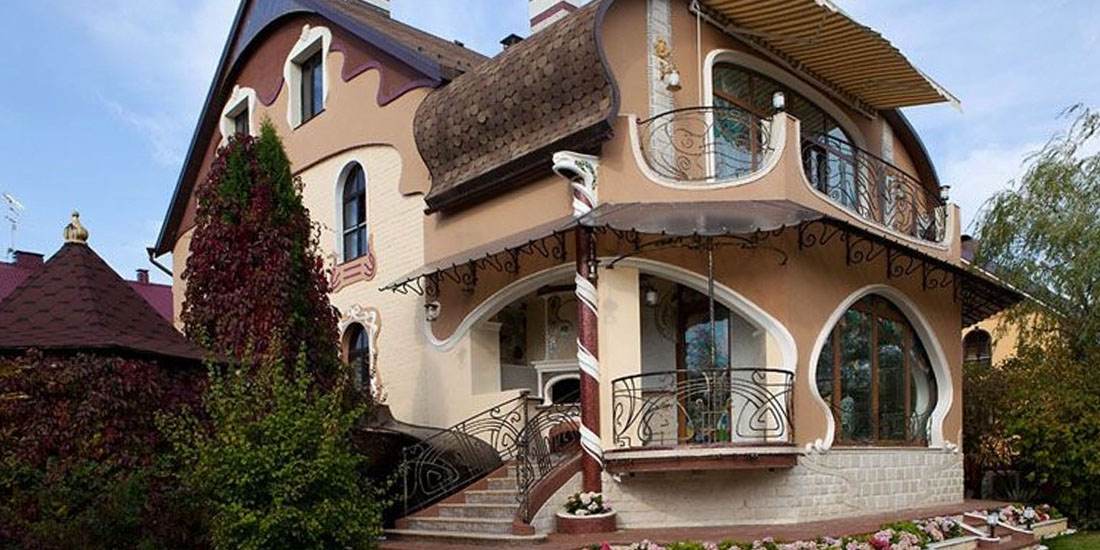
Wooden houses enjoy special popularity. Buildings made of logs or timber breathe well and have low thermal inertia. Historically, such structures were considered partially inert because a central stove with high thermal mass would store heat and warm the building even when the fire was out.
Today, owners of wooden homes rarely install brick stoves inside. Therefore, when deciding what material is best for a house, this option must also be considered. Most often, water‑based heating systems are used. Logs can be classified as non‑inert materials because a 150 × 150 mm timber beam does not store heat, so heating must be turned on at night.
Comments