Articles
Choosing the Perfect Design for a Combined Living Room and Bedroom
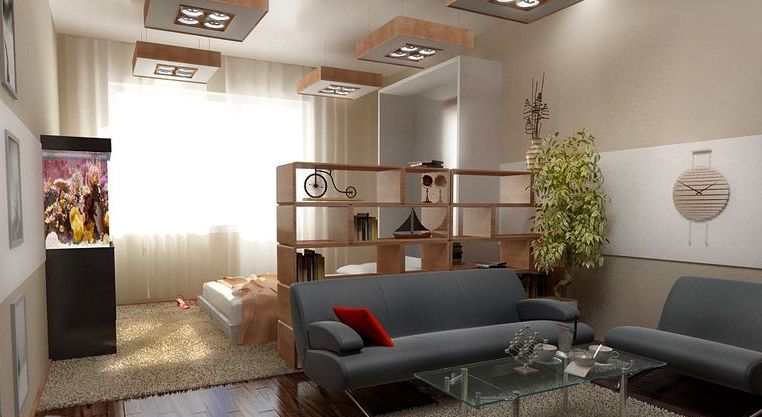
Practical tips for creating a stylish, functional combined living room and bedroom on your own – no professional designer required.

Articles
Practical tips for creating a stylish, functional combined living room and bedroom on your own – no professional designer required.
In today’s world, creating a harmonious design for a combined living room and bedroom requires specific knowledge and skills. The renovation process can be complex, and without experience, not everyone can achieve the desired result. Therefore, it is advisable to study all existing nuances in detail to understand which design to choose and how to implement it.
When renovating a living room that is combined with a bedroom, the most important task is to arrange the furniture correctly. Not everyone can do this properly. You need to achieve not only aesthetic appeal but also multifunctionality, comfort, and style. This is especially challenging in apartments with limited square meters. To solve this problem, decide what must stay in the sleeping zone and what can be eliminated forever. After that, you can select the options that interest you and base your decisions on them.
To arrange the furniture wisely, it is recommended to create a detailed plan that specifies the location of each furniture element. Only then will you get exactly what you intended. It is also important to note the dimensions of each furniture piece to understand how much space will be needed. Skipping this step can lead to various complications during the renovation that will require extra effort to resolve.
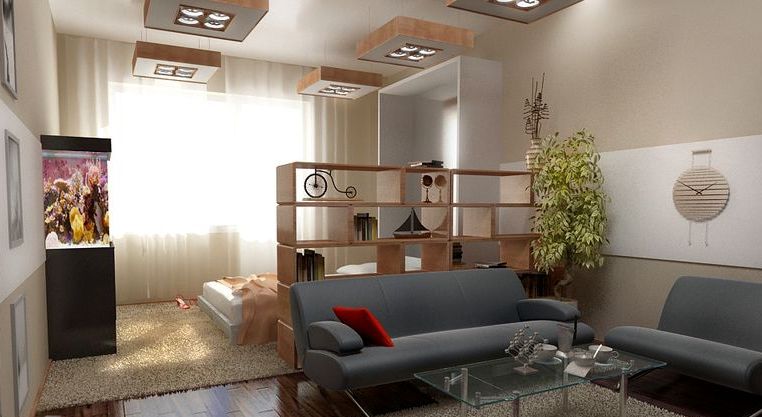
Only a few rooms in your apartment can be merged into one, as many spaces are simply incompatible. However, organizing a well‑thought‑out design for a bedroom and living room is entirely possible; the key is proper zoning. Today, it is fashionable to combine two rooms into one. While this used to be seen as a sign of modest means, it is now considered a mark of modern living. To achieve quality zoning, you should create two main areas:
These zones should differ in color palette and furniture. In addition, a small office can be incorporated into the shared part of the room. The sleeping area is best placed near a window to ensure fresh air and plenty of light, and it should be positioned away from drafts.
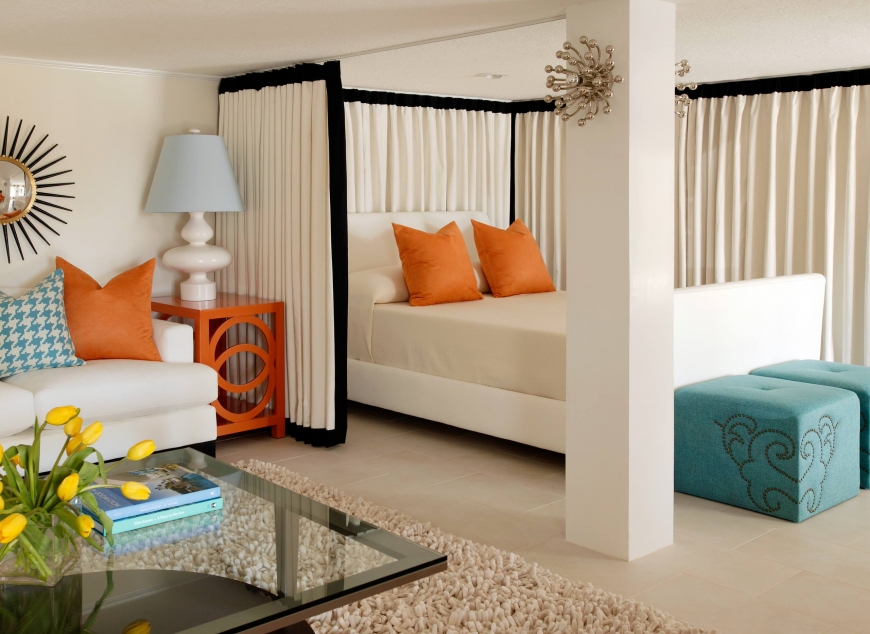
If the combined room has limited square meters, it is not advisable to separate zones with solid partitions. Modern designers often use bamboo curtains, bead curtains, or any other fabric to achieve separation. This type of zoning hides the sleeping area from view without harming the visual perception of the whole space. When choosing curtains, consider personal preferences and the selected interior style. Light, unobtrusive shades are recommended so the curtains do not visually shrink the room but rather expand it. Designers frequently match the curtain fabric with the material used for the windows.
One of the most common zoning solutions is to divide the room with a bookshelf or wardrobe. This option is more practical and comfortable, offering the following benefits:
Increasingly popular are “bookshelf‑bed” or “wardrobe‑bed” constructions. They save a great amount of space, allowing you to add new elements to the combined area. If you decide to install such a piece in your chosen design, you will need to order it from a furniture maker, as ready‑made models are rarely available off the shelf.
Before starting the renovation, you must clearly define the style of the room. This decision often determines the choice of furniture, finishing materials, and decorative items. Today there are many stylistic directions, so it is worth studying them in detail.
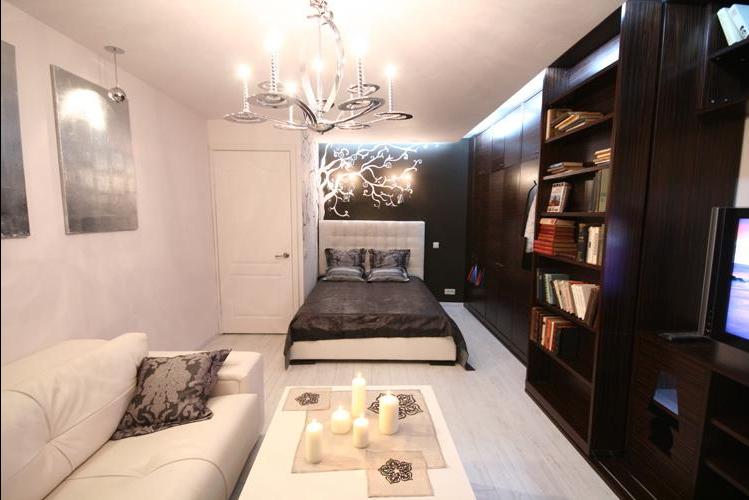
This direction is universal, which is why many people choose it for their renovations. The classic design fits any space harmoniously. Its main features are:
For window treatments, it is advisable to select curtains made of dense fabric, as they perfectly complement the interior.
The modern direction helps save a lot of space and allows you to arrange furniture and other elements correctly. Because of this, it is increasingly chosen by renowned designers for combined rooms. This style is characterized by furniture without loud, extravagant details, combining incredible elegance with functionality. Regarding colors, natural tones such as beige, white, blue, and brown are recommended.
This style features straight, crisp lines, metal, plastic, and glass. It is ideal for ambitious young people who value high functionality in everything. The color palette in this direction is diverse—you can use virtually any color.
The recommendations above will help you create an ideal design for a combined living room and bedroom on your own, without hiring specialized workers. The key is to follow the rules and avoid unwanted errors. Since a renovation is not a one‑year project, you will enjoy the result for a long time, so keep a close eye on the process.
Comments