Articles
Designing a Stylish Apartment Hallway: Tips & Ideas
Learn how to create a bright, spacious hallway in your apartment with the right colors, lighting, furniture, and finishes.
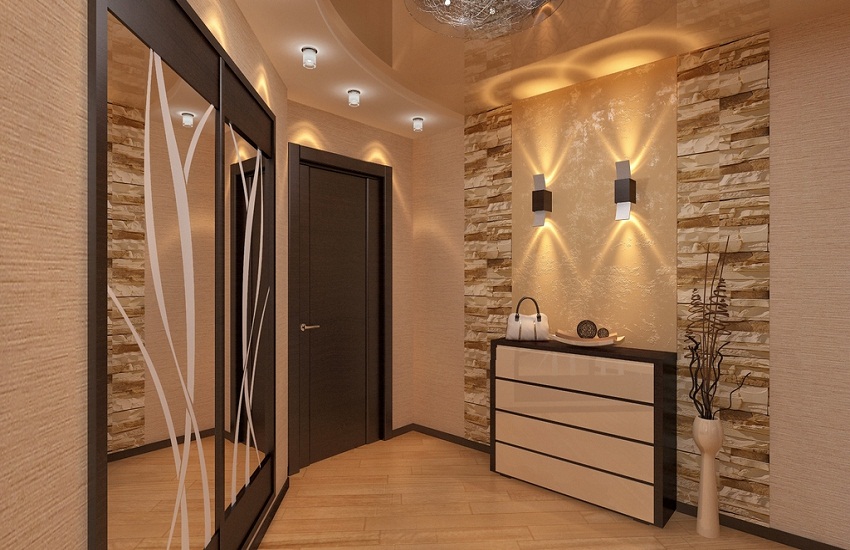

Articles
Learn how to create a bright, spacious hallway in your apartment with the right colors, lighting, furniture, and finishes.
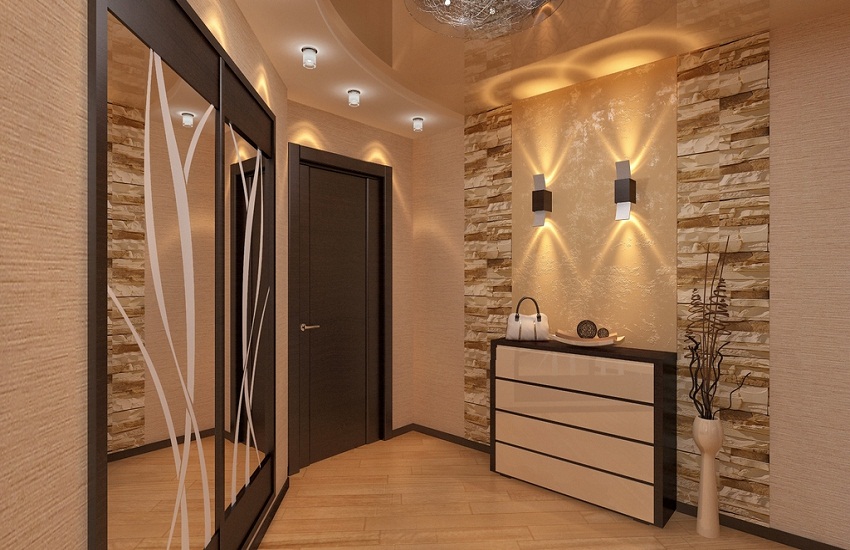
The first thing a guest sees after stepping over the threshold is the hallway design, whether in a house or an apartment. Often, in both old and new floor plans, corridors are allocated the minimum amount of space. However, limited space should not negatively affect the hallway’s arrangement, which can confidently be called the apartment’s calling card.
The main peculiarity of this area is the lack of windows and the presence of several doors. Therefore, the hallway design must be thought out down to the smallest detail. Lighting plays a key role; it can visually expand the space. Insufficient natural light makes any corridor a bit dark and gloomy, so it is preferable to choose finishing materials in bright, light shades.
It is also noteworthy that a hallway is not suitable for storing a large number of items in plain view. An excess of decorative elements creates a feeling of clutter and cramped space. To solve this problem, equip the hallway with spacious built‑in wardrobes where all belongings can be hidden, freeing up additional room.
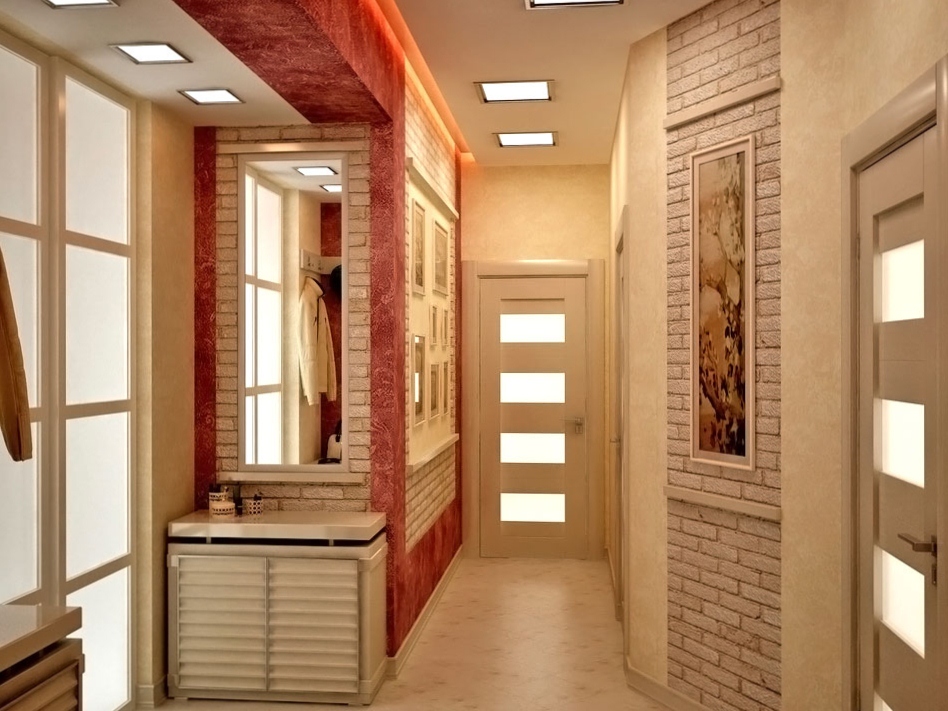
For both large and small hallways, the best choice is a greenish or bluish tint that visually makes the room feel more spacious and lighter. The color should be selected so that the hallway interior harmoniously blends with the design of adjoining rooms. The overall look must be unified; a dark, gloomy hallway leading into a spacious, bright living room is not an ideal solution. Modern designers favor the following colors:
If black accents are used in the hallway design, the interior should also contain many metallic and mirrored surfaces. White light not only enlarges the space but also makes it look cleaner, emphasizing order. To prevent the hallway from resembling a medical facility, it is essential to balance the décor with bright tones.
Gray is unique in that it harmonizes with almost any other hue. Cool gray shades give a stricter appearance, while warm tones add coziness and comfort. Typically, walls are covered with wallpaper. Liquid wallpapers or textured ones intended for painting are especially popular.
Painting the walls is also an effective way to design a hallway. Other coatings can be used as long as the finish fits organically into the overall interior concept. Painted walls have the advantage of being easy to refresh when needed. Professionals advise against two‑tone wallpaper because it visually reduces the perceived area. Even in large corridors this approach looks out of place, especially with minimal lighting. For a unique hallway design, artificial stone can be employed for zoning.
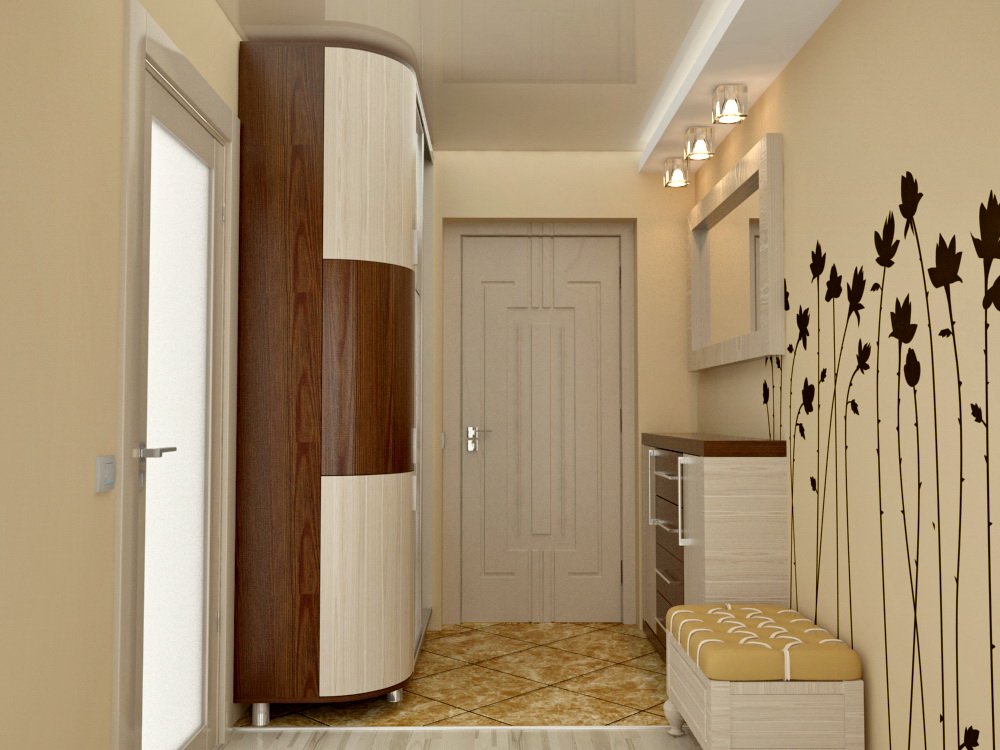
Built‑in wardrobes are the best furniture option for storing seasonal outerwear and hats. It is also practical to place a shoe shelf inside the hallway. A sliding‑door wardrobe custom‑made to the ceiling height and wall contours fits perfectly into the interior. If space allows, a small dressing area can be added by increasing the furniture depth. With the right furniture selection, you can achieve not only an attractive hallway design but also maximum functionality.
Choosing a set with mirrored doors saves wall space for shelves or coat racks, and the mirrors create an illusion of a larger hallway.
A small shelf for gloves, umbrellas, and other accessories is a convenient addition. Such multi‑shelf coat racks are usually both attractive and decorative. If the furniture looks overly minimalistic and strict, a bit of decoration can soften it. Hallway furniture should be in a light shade. For a luxurious large hallway, dark furniture can be used, but it should be paired with light finishes.
Multi‑level lighting is the most effective and practical solution. Spot LED fixtures placed in various locations can illuminate not only the ceiling but also furniture cornices and shelves. Pay special attention to lighting mirrors; fixtures should be positioned on both sides of the reflective surface. Generally, the hallway design and the adjacent room should share a common style, so lighting must harmoniously fit the overall concept.
Properly positioned light sources can hide minor corridor imperfections, which is why designers often use LEDs. The space can appear visually larger if the light is reflected or diffused.
Modern designers create projects for corridors of various layouts and sizes. When all design techniques are applied correctly, excellent results are achievable. With a touch of imagination, the hallway design in a residential setting becomes truly original and individualized.
Comments