Articles
DIY Balcony Renovation: Step‑by‑Step Guide for a Quick, Mistake‑Free Makeover
Learn how to complete a DIY balcony renovation quickly with our step‑by‑step guide that helps you avoid common mistakes.

Articles
Learn how to complete a DIY balcony renovation quickly with our step‑by‑step guide that helps you avoid common mistakes.
If a major interior redesign, re‑planning, or other serious changes are taking place inside the apartment, the balcony renovation must also be carefully thought out to make the home transformation as complete as possible. Remember that these square meters can become additional living space when combined with the area of one of the rooms. Typically, a balcony (loggia) is a small room used for storing various items and for drying laundry. In a big city it is inefficient to allocate separate “squares” for such purposes, so it is recommended to integrate the balcony into the overall interior space of the flat.
Before starting the renovation, it is necessary to plan it thoroughly. First, consider which room shares a wall with the balcony—usually the kitchen. In this case, an ideal solution is to create an additional leisure zone separated from the main area by a bar counter. If the balcony adjoins a bedroom, you can design a small romantic nook that extends the relaxation room, where the homeowners can enjoy sunsets and spend unforgettable time together.
If you want to avoid re‑planning, think about creating a private office or a small winter garden. Many options are possible, but you should always follow your personal taste and preferences to end up with a cozy, comfortable interior. It is also important to understand that the balcony will need to be renovated both from the outside and the inside: insulate it, seal all gaps, and choose the optimal cladding. The process is not overly labor‑intensive if you follow a well‑thought‑out plan, and problems will not arise.
The first step before beginning the renovation is to dismantle all worn‑out coverings and flimsy partitions, check cemented surfaces for voids, and additionally reinforce them with an armored frame or special metal brackets.
It is recommended to replace the external panels right away. Only lightweight materials should be used for balcony renovation. First, completely clean the balcony walls of the old coating, then let them air out and inspect for voids, cracks, or gaps. If any are found, clean them out and then cement them. Large holes are best filled with brick; cracks should be cemented after being filled with foam to prevent rot. Small cracks can be sealed with silicone sealant.
Today there are several types of glazing used by apartment owners. The most common standard options are:
When discussing materials, note that there are four main options: roller shutters, and frames made of aluminum, plastic, or wood. The most reliable and durable material is considered to be roller shutters, although they are the most expensive. Plastic frames are the cheapest. Therefore, it is advisable to favor the classic choice—wood. In cold weather, double‑glazed units with two chambers will help retain precious heat by preventing cold air infiltration.
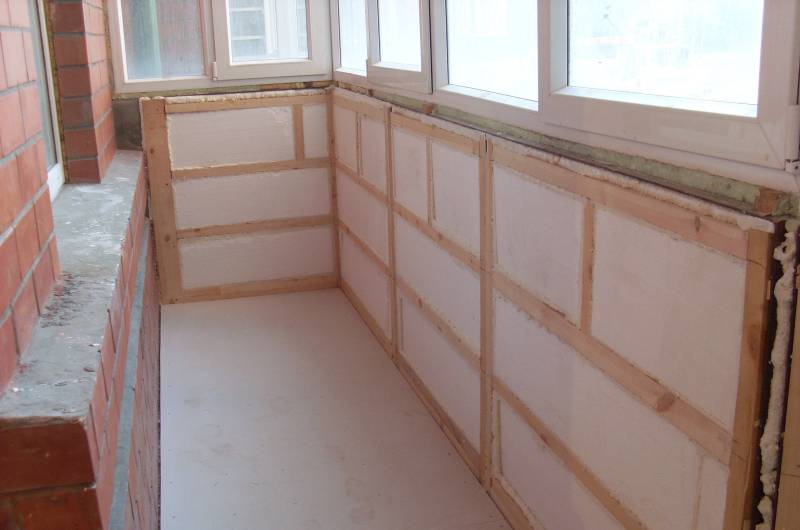
To reduce heat loss, the balcony walls must be additionally insulated. Immediately after glazing, seal every gap with polyurethane sealants and mastics. Only then can insulation begin. In regions where winter lasts longer than usual, it is advisable to also insulate the floor and ceiling with suitable materials. Suitable options include mineral wool, foam board, and expanded polystyrene.
Extruded polystyrene foam enjoys an excellent reputation today. The material has low thermal conductivity, is lightweight and thin, cuts easily, and does not crumble. First, waterproof the floor, walls, and ceiling, then apply a cement screed and lay the chosen insulation, covering it with vapor‑barrier tape to prevent mold, mildew, and other problems.
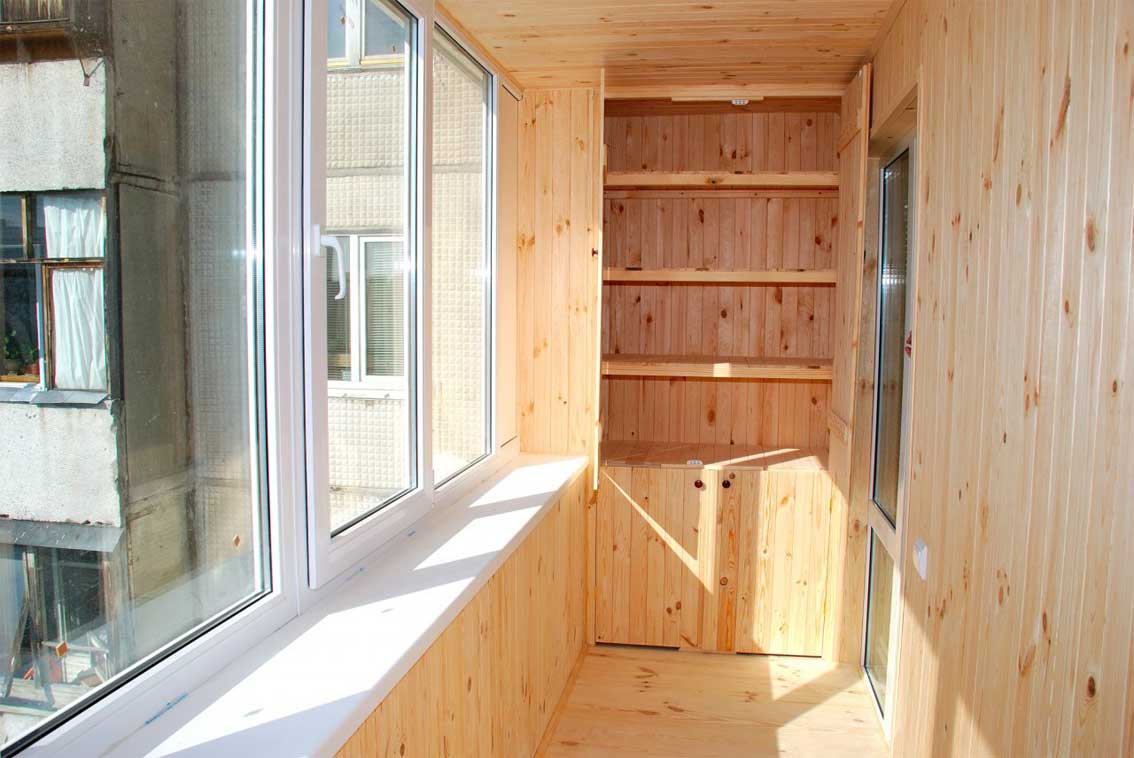
For interior finishing of the balcony, lightweight, paintable, moisture‑resistant drywall works excellently. MDF panels, wooden or plastic paneling can also be used. Wooden paneling is the most economical and durable material with attractive visual properties. It is best to choose pine, which is mounted over a frame of metal or wooden battens. The integrity of the construction depends on the correct alignment of the frame in all planes.
If you decide to carry out a DIY balcony renovation using a trolley, it is recommended to start its installation from the ceiling. Under the frame, apply a waterproofing layer, such as roofing felt, and then the cladding material, which is fastened with nails or clamps.
Comments