Articles
DIY Kitchen Finishing: Best Materials for Walls and Surfaces
Choose the right material for kitchen wall finishing to create a functional, attractive and durable space. Explore washable wallpaper, tiles, panels and more.

Articles
Choose the right material for kitchen wall finishing to create a functional, attractive and durable space. Explore washable wallpaper, tiles, panels and more.
If you look at the options for renovating a kitchen space, it is important to note that wall finishing in the kitchen is one of the main elements influencing the overall design style. Modern designers usually split this functional room into two distinct sections. This choice is not accidental, because the kitchen has always served two primary purposes.
Initially, it is the work zone, often called the cooking area. The second zone is the dining area. Most homeowners are satisfied with this scheme, and the material for the renovation is selected accordingly. The chosen finish must not only look presentable and attractive, but also be practical, durable and wear‑resistant.
Before making a final decision, you need to understand that kitchen walls are constantly exposed to high temperatures, grease and steam, especially in the work zone where food is prepared. This factor must be taken into account when drafting the design project. Consequently, the materials selected for finishing must be able to withstand these adverse loads easily.
Fortunately, the modern building market is full of innovations. Because of this, kitchen wall finishes can easily stand up to the toughest challenges. This does not mean that the same material has to be used on every wall; a single material can be enough to organize the cooking zone. The most suitable options are:
When discussing materials for the dining zone, the requirements are less strict, which greatly expands the choice and allows an attractive finish with lower costs.
Ceramic tile has a long history. Over the centuries, it has become clear that using it inside a kitchen is not a fashion trend but a typical practicality. This reliable, sturdy material resists high temperatures and excessive moisture excellently. Stubborn stains can be removed quickly from the tile surface without special cleaning agents.
Modern manufacturers offer a wide range of ceramic products in various sizes and designs, both for walls and floors. Therefore, a kitchen can be finished with a high degree of artistic and designer expression.
A few years ago, apartment owners who thought about kitchen finishing rarely considered wallpaper. Today the situation has changed. With the advent of washable paper‑based wallpapers, they are now actively used in the work zone. The most popular type owes its popularity not only to its relatively low cost but also to excellent practical qualities, durability and visual appeal.
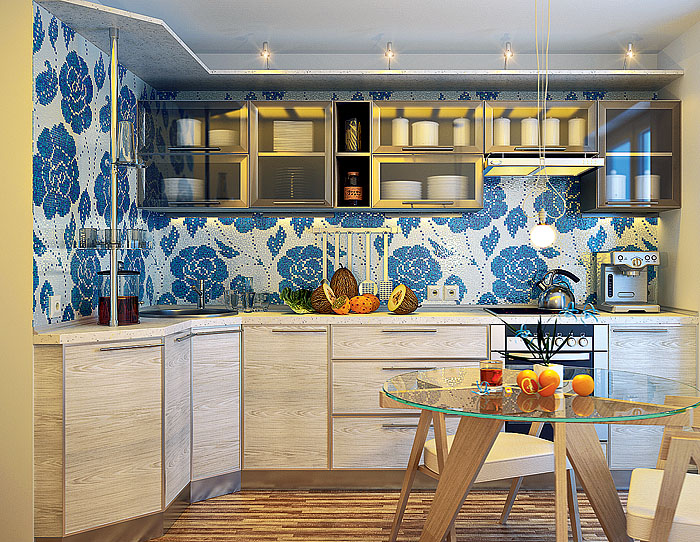
They resist all negative factors as well as ceramic tile does, wash quickly, and remove grease or any other stains completely. In addition, wallpaper is easy to apply, so the kitchen interior can be refreshed more often. Some types of finish can even be painted.
Modern manufacturers have created an innovative building material ideal for decorative finishing of surfaces that are likely to get heavily soiled, such as a kitchen. Liquid wallpaper belongs to the group of completely water‑resistant materials. Its popularity is soaring because the durable coating also has an attractive aesthetic appearance. To further protect walls from water, grease and other substances, it is covered with two or three layers of acrylic or latex paint.
Painting kitchen walls has been used for as long as ceramic tile. Antimicrobial or water‑based emulsion paints can be used for finishing works. The latter is preferred by builders because of its high performance characteristics. Many specialists consider water‑based paints to be the leaders among their peers. The material is environmentally friendly, making it suitable for homes with small children. A major advantage is the unlimited colour palette, which allows you to match any design.
Antimicrobial paint is a variant of water‑based paint with the addition of silver oxide. A few years ago this material was used exclusively in medical facilities, but today it is popular among builders for kitchens, bathrooms, children’s rooms and more.
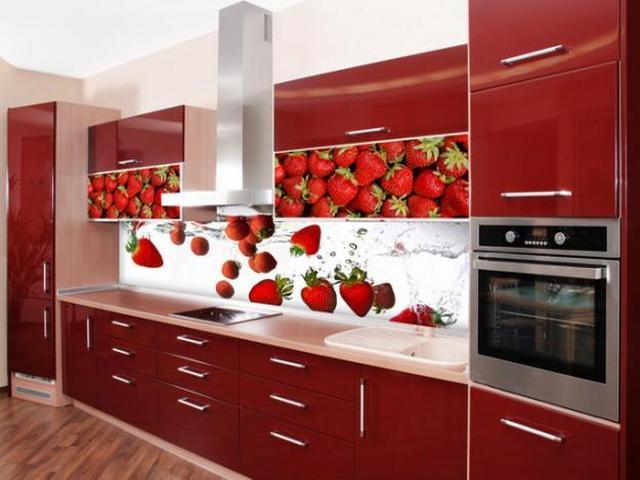
Plastic panels belong to the category of modern innovative materials that possess excellent characteristics, preventing the growth of microorganisms on their surface. This feature often becomes decisive for users. In addition, plastic is completely impervious to moisture and temperature fluctuations, making it ideal for kitchens. The only caution is that the material should not be used near open flames.
However, before covering kitchen walls with plastic panels, you should carefully weigh the pros and cons. The material is less suitable for very small kitchens because it is mounted on a special frame that can reduce the perceived room size.
Comments