Articles

How to Build a Wooden Log House: Step‑by‑Step Guide

Learn the complete process of building a log house, from planning and foundation to wall erection, roofing and finishing, with tips on advantages and drawbacks.

August 3, 2016 7:18 PM
admin 0
How to Build a Wooden Log House: Step‑by‑Step Guide

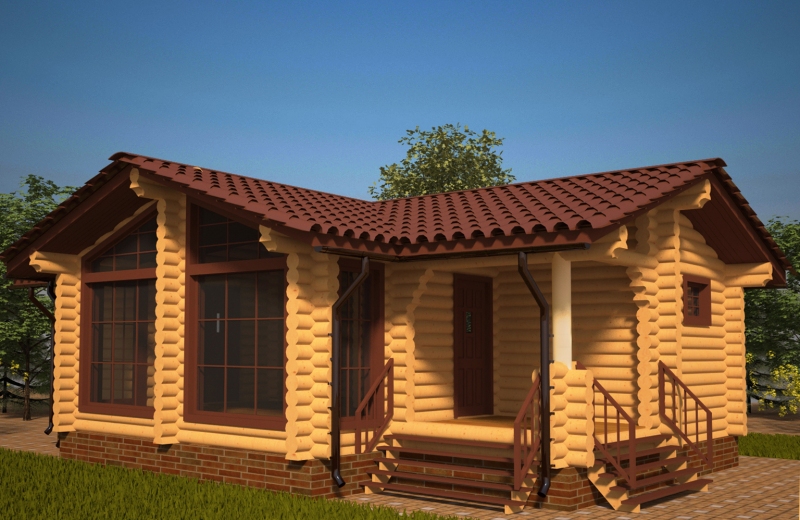
Log houses made of solid timber can be considered a national Russian cottage built using centuries‑old technology. In the past, log construction was used for everything—from residential buildings and watchtowers to princely palaces and terems. Over time, stone and later modern building materials replaced logs, but today many people return to nature and choose log construction for residential projects.

Advantages

The ancient technology has its own set of benefits. Log structures possess several notable qualities:

  1. Ecological friendliness – The material creates an optimal indoor microclimate. One key feature is excellent air exchange: breathing walls maintain stable oxygen levels and humidity. When excess moisture appears, wood absorbs it; when the air is dry, wood releases moisture back.
  2. Low thermal conductivity – This ensures low energy consumption for heating. Wood conducts heat about 2.5 times less than brick, and in summer the wooden walls retain coolness effectively.
  3. Durability – Many assume wood rots quickly, but studies show that log buildings often outlast comparable brick structures. Modern wood preservatives further protect against decay, rodents, and fire.
  4. Attractive appearance – The natural look of glued or solid timber is an undeniable aesthetic advantage.

строительство из срубов

However, the material also has drawbacks. The main one is settlement. A newly erected log house continues to settle for up to two years before the final construction stage. Even after this period, some additional shrinkage may cause minor deformations or misalignments. There are also size limitations: the standard log length is six meters, and larger buildings increase costs significantly. Interior wall cladding should be wood only to preserve proper ventilation.

Construction Technology

To build a house from solid or glued timber on your own, you must thoroughly study the theoretical material and learn to operate various power tools. If you lack basic construction skills, it is advisable not to start the project. Break down each construction stage carefully:
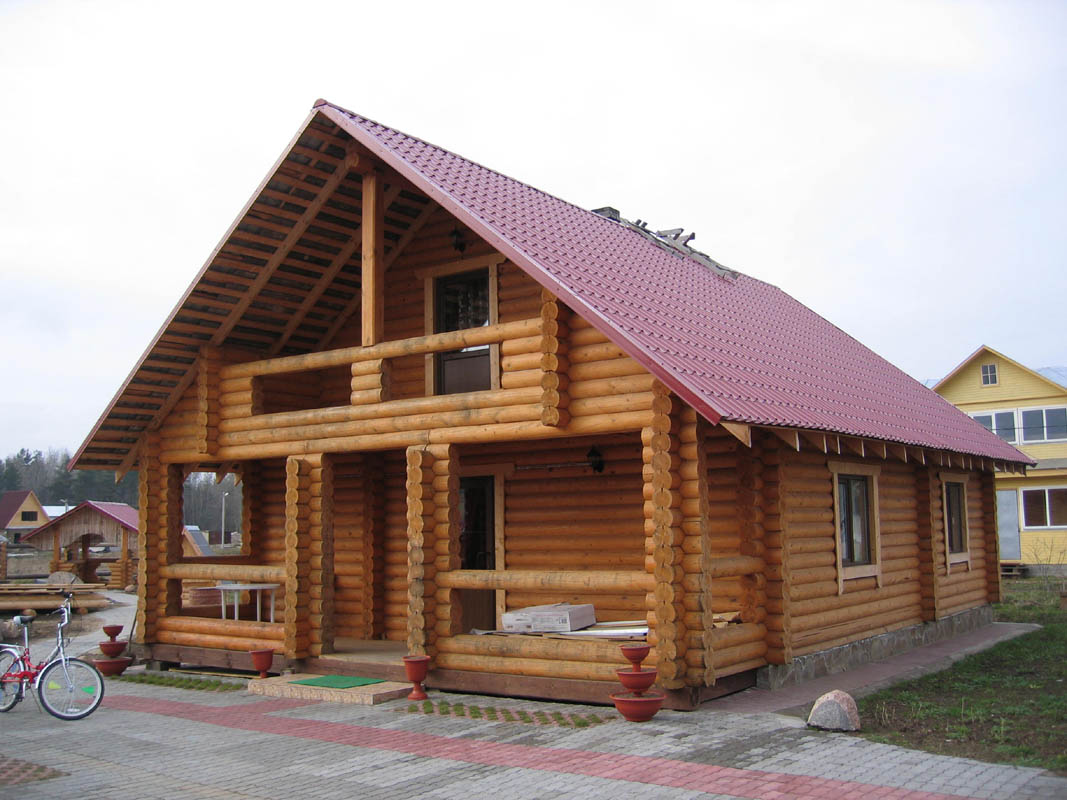
  1. Design – Begin with a detailed count of all building elements. Consider the total weight of the house, the mass of each component, roof type, wall layout, and locations of windows and doors. Every detail must be coordinated, and a step‑by‑step assembly sequence is developed according to the technology.
  2. Preparation – This stage includes site planning, marking the foundation layout, earthworks, and installing all required utilities.
  3. Foundation – A wooden house does not need a massive foundation because of its relatively low weight. An exception is a building with a basement level.
  4. Wall erection – Use logs that were felled in winter, when the wood is almost completely sap‑free. Logs are pre‑cut in a factory according to the project, and notches for joining are prepared. Once the material reaches the construction site, workers simply assemble it like a giant puzzle following the prescribed rules.
  5. Roof installation – This step is delicate because wood continues to settle. The rafter system must be meticulously designed; any mistake can lead to irreversible damage.
  6. Finishing – Begin only after the two‑year settlement period is over. Insulate the structure, treat the joints between logs with natural moss immediately, and use only wood for interior cladding to maintain excellent ventilation.

строительство дома из сруба

Despite the complexity and numerous nuances, anyone willing to learn can master the technology of assembling a log building. Consequently, log house construction is now one of the most popular methods for building country residences. Thanks to its unique properties, timber is an optimal choice for creating comfortable living conditions.

Comments

Sort:
Per page:
Пока ещё нет комментариев