Articles
How to Create a Perfect Design Project for a Child’s Bedroom
Learn how to design a safe, eco‑friendly, and fun bedroom for your child, involving them in the process and choosing the right furniture.

Articles
Learn how to design a safe, eco‑friendly, and fun bedroom for your child, involving them in the process and choosing the right furniture.
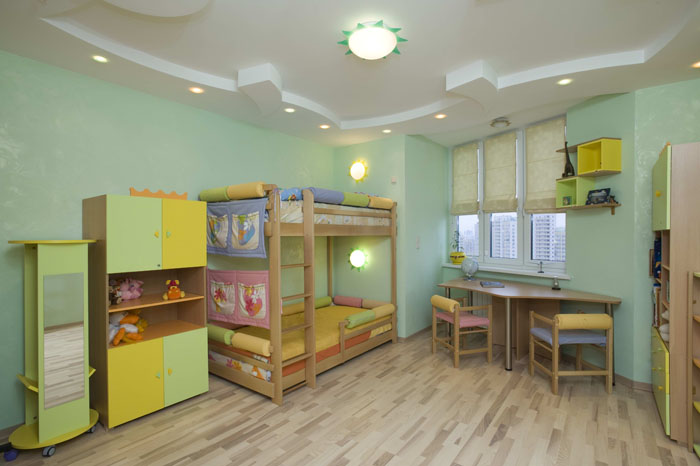
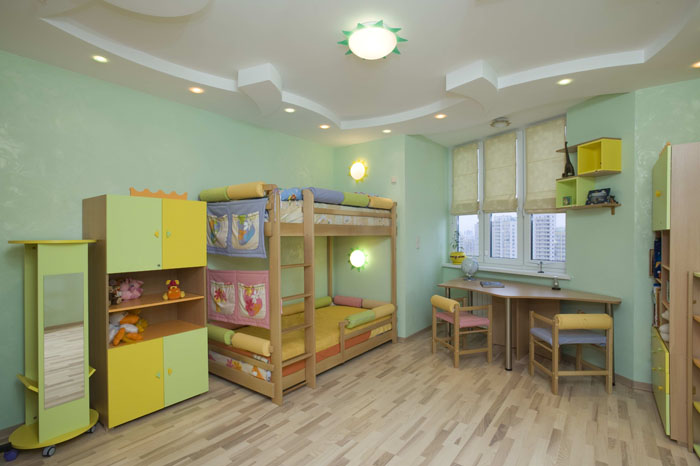
The room that belongs to a child must be arranged appropriately, so designing a children’s bedroom is a crucial stage of space modernization. Inside this little room the child sleeps, studies, plays, and grows. It can be called a separate universe that should be cozy and comfortable for the child. The approach to decorating a children’s room differs radically from furnishing any other space. Here, special attention must be paid to safety, the ecological quality of materials, and the choice of color palette. Every element should have a purely positive impact on the young, developing body, match the child’s age, and suit their personal preferences.
To create a proper design for a children’s bedroom, you first need to listen to the child, ask what they expect from their haven, and how they want it to look. For example, many rooms are themed around favorite fairy tales, and the play corner is decorated with images of beloved characters. Girls often “order” a pink vanity with a mirror. There are countless ideas for planning, but initially you should consult the future owner of the room.
When planning the interior, parents must consider every need of the child, because this is where the child will spend most of their time alone or with friends. Although an adult would never host guests on a bedroom bed, for a child this is a normal practice. Therefore it is vital that the design of the children’s room pleases them as much as possible.
Ideally, if the room’s dimensions allow, it can be divided into zones. There are several tricks that help save free space. For instance, a study desk can be corner‑mounted with functional hanging shelves. The relaxation zone includes a sleeping area; in practice, preferences differ greatly between boys and girls. Girls love airy canopies, while boys often ask for a bed that looks like a car or a pirate ship. An important stage of designing a children’s room is organizing a play zone. Remember that children of a certain age spend a lot of time on the floor, so the best prevention against colds is a natural‑fiber carpet with a high pile.
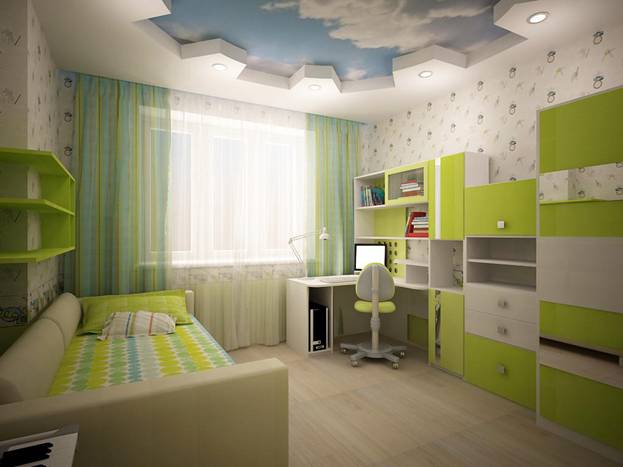
Furniture selection is usually based on the child’s gender. For example, a design for a boy will include elements that interest growing males—airplanes, cars, robots, etc., while girls prefer fairies, princesses, and ponies. However, regardless of gender, hygiene must receive proper attention, because dust on textured surfaces is practically impossible to eliminate. This point is crucial in the design process, as dust mites are a major allergen.
Artificial carpet coverings and linoleum have no place in a children’s room. They can emit toxic substances and trigger allergies, which are not uncommon. A small rug, as mentioned above, can be used to dress the play area. Walls are best finished with water‑based emulsion paint, wallpaper, or a three‑layer textured coating. Here, ecological safety and pleasant appearance are top priorities, making wallpaper the most preferred material.
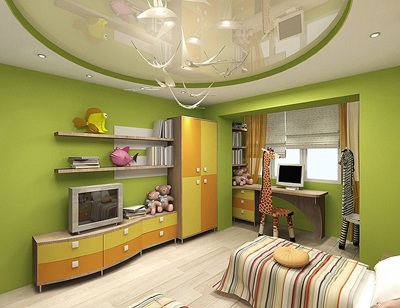
Parents thinking about a children’s room design should recall their own childhood. This exercise helps understand the child and find answers to many questions. If a child refuses to fall asleep alone, talk to them—perhaps they are afraid of something or someone. To solve the problem, simply move the crib or remove intimidating elements from the interior that provoke anxiety. The truth is easy to discover; the key is to listen to the child and trust parental instincts.
It is also important that the child be fully involved in preparing for the upcoming renovation. The parent should let the little one choose wallpaper, furniture, and lighting fixtures independently. The adult acts as a mentor, offering advice on how best to design the children’s room, but no more. If the result does not impress the child, the whole effort will feel wasted.
If the budget allows, furniture for the room should be made of natural wood. It is more durable and long‑lasting. A classic furnishing scheme is ideal when a brother and sister share the room. Moreover, as they grow, the furniture won’t need to be replaced until the teenage years, when the beds become too small. Thus, a design project for a children’s bedroom can be both correct and long‑term.
Lighting is another key factor. Dim lighting is prohibited. Illumination should be moderately bright so the child does not have to squint or strain their eyes. At this stage of life, visual health is being set, so the interior work must be carried out with utmost care; any overlooked detail can negatively affect the child’s development and personality formation.
An ergonomic, attractive children’s room design must be functional and practical. Therefore, avoid using many useless decorative elements. Let the child handle the decorative part themselves, explaining that not only games but also practical items useful for study are appropriate.
Comments