Articles
How to Design a Landscape for Your Garden
Learn practical steps to create a beautiful garden landscape: zoning, budgeting, water features, plant selection, paths, and fences.

Articles
Learn practical steps to create a beautiful garden landscape: zoning, budgeting, water features, plant selection, paths, and fences.
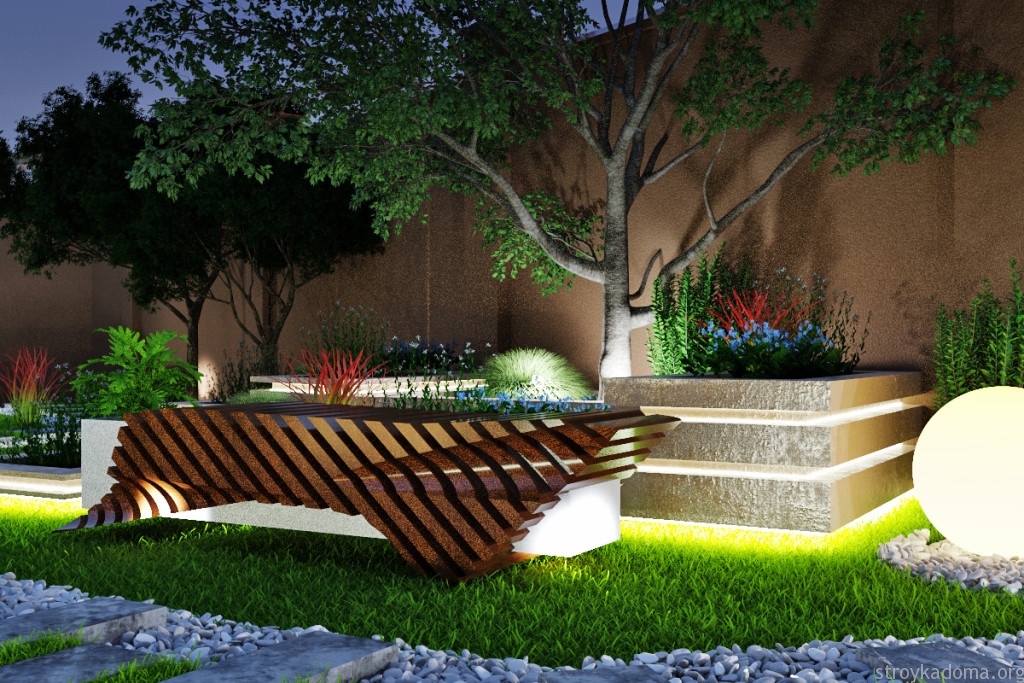
Landscape design in a garden is the most important element for creating a cozy, beautiful atmosphere. Before deciding on the final idea for the plot, it is advisable to draft a plan that divides the entire area into zones and to determine the budget. Only after that can you start the layout, which requires a project where each individual zone is assigned specific design elements or their combinations.
Garden landscaping is more than just beautification and greening. For example, creating gardens is a true art with a millennial history. Styles change and new trends appear, while gardens remain timeless. Compared with vegetable gardening, landscape design is a universal discipline, whereas gardening is more agricultural.
Ponds and water bodies are an integral part of landscape design and are especially popular among dacha owners. Before deciding whether to include water features on the plot, you need to understand what the owner expects from them. A garden’s water element can be purely aesthetic, purely functional, or both. Water from an artificial pond not only pleases the eye but can also be used for irrigation. However, this does not mean the two purposes cannot be combined.
The art of water feature design is not limited to still ponds. It also includes watermills, fountains, meandering streams, waterfalls, and cascades.
Without proper greening, a cozy, beautiful atmosphere near the house cannot be achieved. If you lack time for regular garden maintenance, it is best to choose trees, shrubs, and perennial flowers that require little attention to thrive. First, decide which plants will be placed where. Planning should consider the fullness and height of the selected greenery so that one planting does not obscure another. To obtain a harmonious garden landscape, divide the area into three standard zones: outer, intermediate, and inner.
The outer edge of the plot is usually styled with evergreen plants arranged as a living fence. The intermediate zone beautifies the area around windows and the leisure space. The inner part borders the house. Fruit trees can be planted along the perimeter. If you prefer decorative species, choose juniper, cedar, pine, or fir. For a two‑row planting scheme, combine trees with flowering shrubs such as lilac, currant, rose bushes, and others.
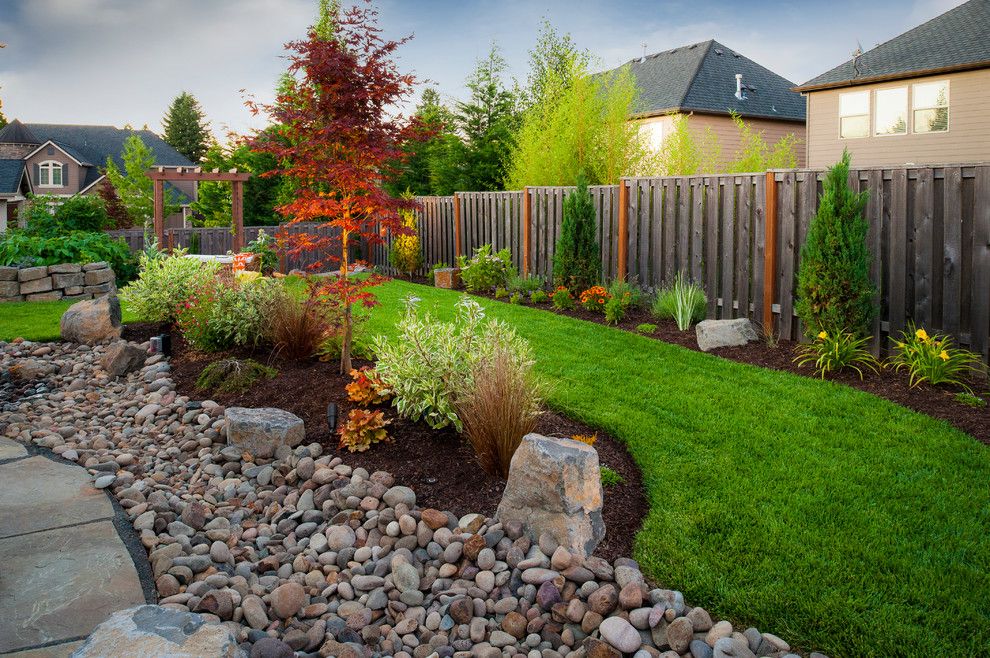
When a garden design has been neglected for a long time, the plot often becomes overgrown with wild vegetation. Clearing the borders of this growth is not mandatory, as it can be refined. Branches are trimmed, an aesthetically pleasing shape is given, and cultivated plant varieties are introduced, creating a low‑maintenance landscape composition.
To design the inner part of the plot, let your imagination run wild. In its center you can place a small gazebo, whose best decoration will be climbing plants. Vining crops easily hide any design flaws and unsightly structures. Hanging baskets or suspended pots with trailing plants—such as pelargoniums, dichondra, fuchsias, succulents, fortunes, and others—look exceptionally beautiful.
Designing the intermediate zone is the most challenging, as it is the largest area. The plants chosen for this zone require the most attention because they are constantly visible. Proper irrigation is also essential to ensure healthy vegetation throughout the year. The leisure area is best covered with lawn grass, which must be watered and mowed regularly. This solution requires minimal time and money while remaining highly attractive.
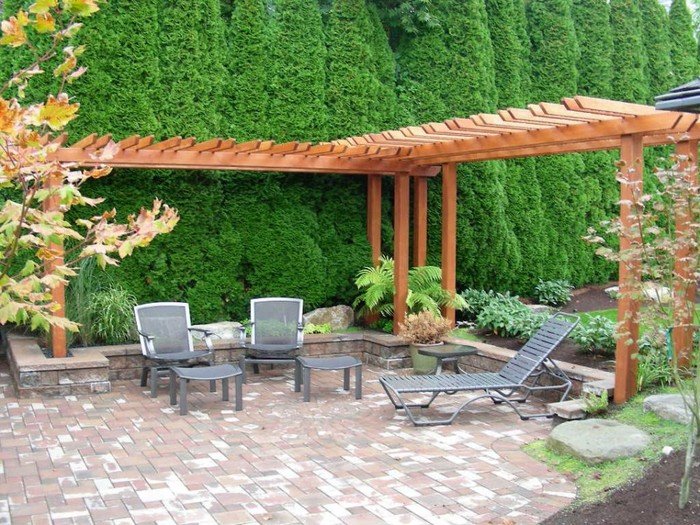
Typically, a garden landscape includes a system of pathways. This simple element helps create a unique, unparalleled appearance. Paths leading to gazebos, sheds, alpine houses, or the car parking area are important not only for aesthetics but also for functional circulation. To use them year‑round, the design solution must be carefully thought out.
Fences are also an important element, serving a purely decorative function, as there is no need to block off your own property. Attractive garden fences can be used to divide the plot into zones. Fences may be made from any material, provided they blend organically with the overall stylistic concept.
Comments