Articles
How to Properly Install Fence Posts
Learn the correct steps for installing fence posts to ensure a durable, stable fence. Materials, methods, and tips for various soils.

Articles
Learn the correct steps for installing fence posts to ensure a durable, stable fence. Materials, methods, and tips for various soils.
Today many homeowners who decide to install fence posts themselves wonder how exactly the procedure is carried out. It often seems impossible to do it with your own hands, but that’s not true. Usually the desire to build a fence arises in people who want to save money by not paying workers. For this reason, a detailed step‑by‑step instruction can be easily found online.
It is important to understand that there are no technical difficulties; the challenge is mainly physical. Regardless of the construction material you choose for the fence, the foundation of the structure is the installation of the posts. The material determines the strength and the cost of the fence, which is why many wonder how to correctly install fence posts so that the fence serves for a long time.
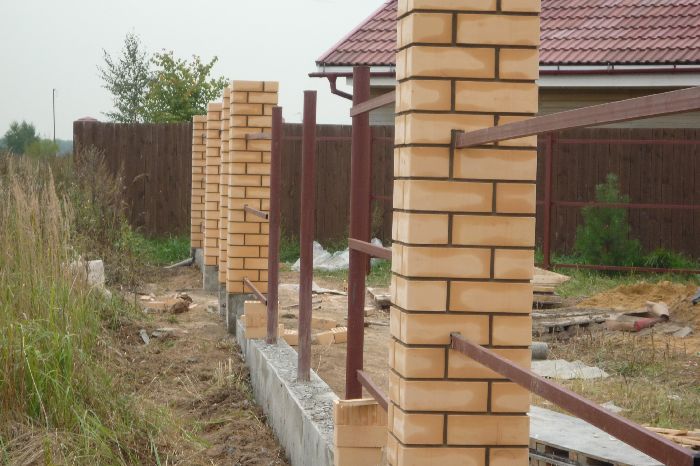
Often the choice of post type depends on the homeowner’s budget and aesthetic preferences. The range is wide, from wooden logs to brick or forged metal posts. Wooden posts are simple, but their high price often deters buyers. Moreover, they are not intended for long‑term use; even when treated with the most durable antiseptic solutions, they rarely last more than ten years. If you decide to install wooden posts, be sure to treat them with a copper sulfate solution to significantly extend their service life. Because of this major drawback, wooden fence posts are used mainly for low‑type hedges, garden fences, and temporary enclosures.
Another material used for this purpose is asbestos‑cement (asbesto‑cement) pipe. These components are relatively inexpensive, fairly technological, strong, and completely resistant to rot. The main disadvantage is the difficulty of attaching rails to them; workers have to fabricate various clamps and brackets. If you don’t mind a bit of extra work, asbestos‑cement pipes are an excellent and rational choice.
When installing such pipes, the top must be sealed; otherwise the support will quickly deteriorate. Before correctly installing fence posts, it is advisable to become familiar with this procedure. Without a protective cap, the pipe becomes a sort of well that fills with water. In winter, when temperatures drop, the water freezes and expands, causing the pipe to split at the water level.
Today, the most common posts are metal tubes. Their main advantages are:
Unlike asbestos‑cement components, metal tubes do not burst when water enters; they may crack, which causes little harm. Many owners are unaware of cracks in their fence supports.
Concrete posts are installed rarely because of their high cost. Often, owners fabricate their own concrete “piles,” which are durable, high‑strength, and reliable. Making concrete posts requires effort, but the monetary expense is minimal.
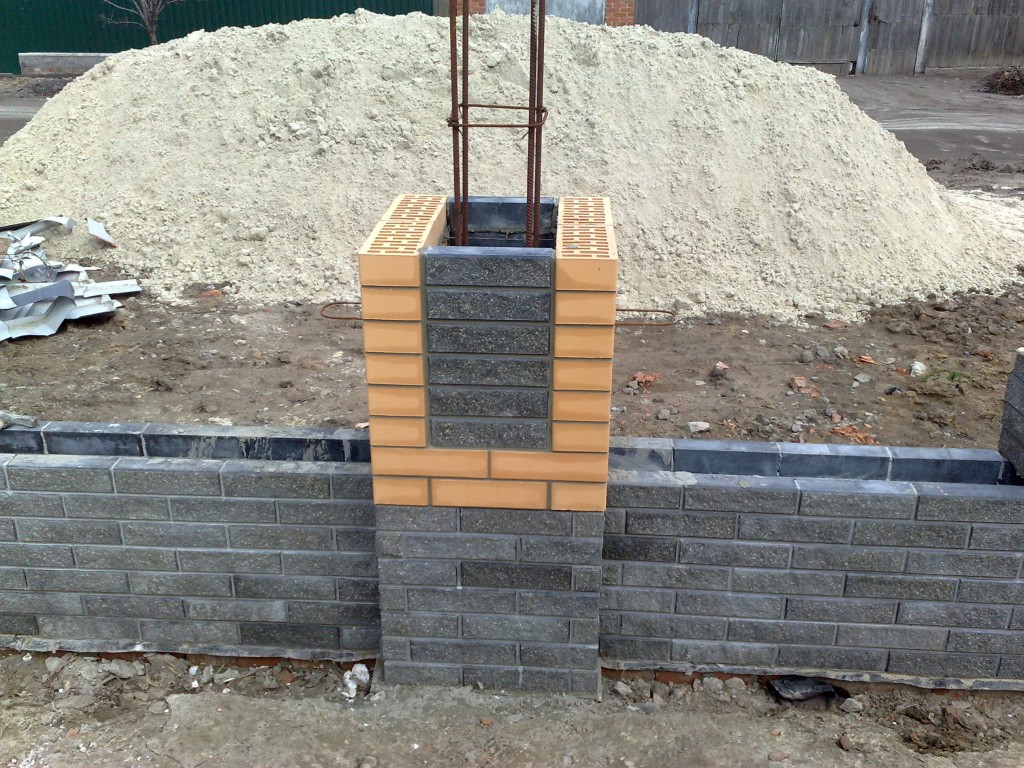
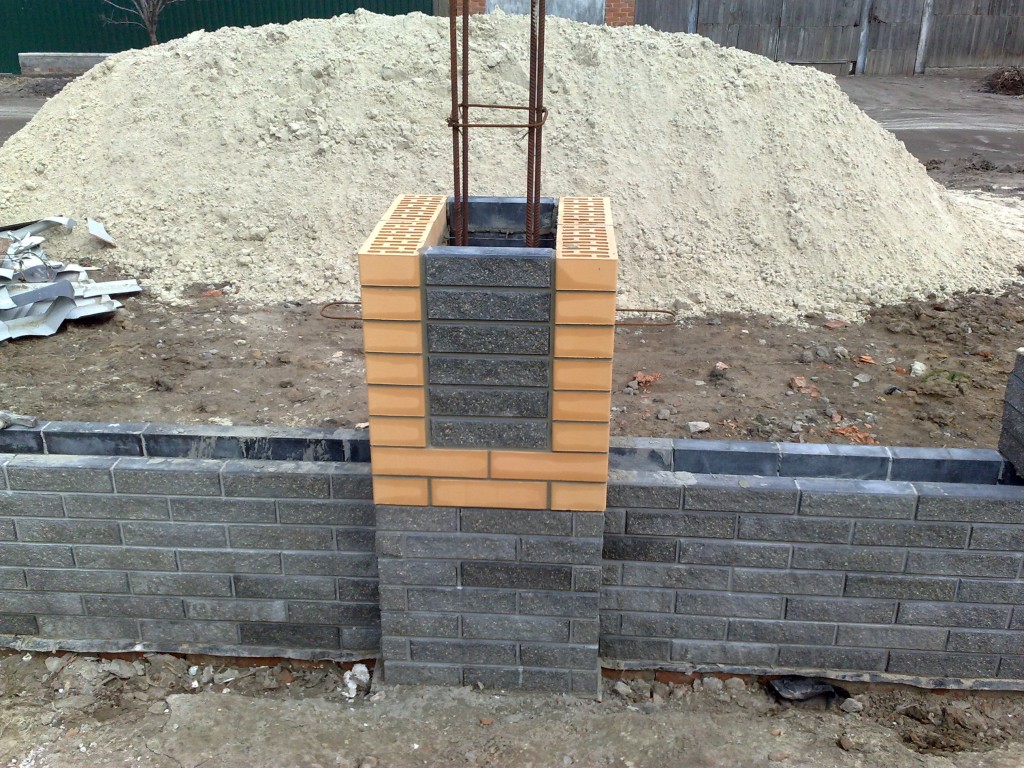
Brick supports are decorative but very heavy. They are usually used in expensive fence designs. Installing brick posts requires a complex foundation and the use of a low‑shrinkage mortar to bind the parts together. In effect, such a support looks like a metal post wrapped in brick. If you do not know how to correctly install fence posts and attempt the procedure on your own, the resulting structure will deteriorate over time.
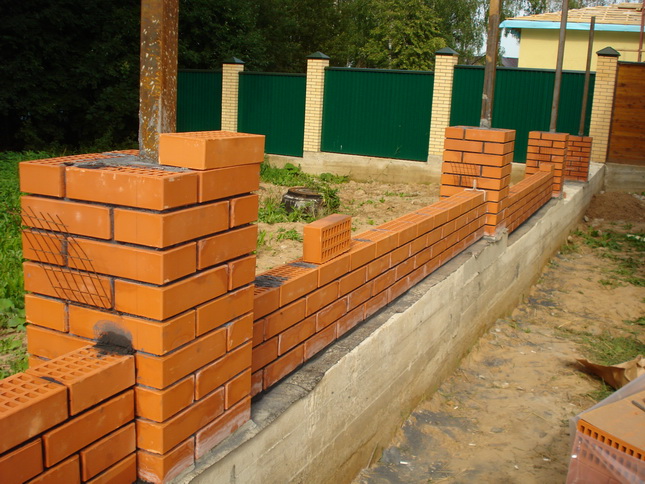
The installation method often depends on soil characteristics, but most installers use the following universal technique: a hole is drilled in the ground with an auger, the post is placed into the hole, and the remaining space is filled with concrete mix. However, this method is not entirely practical because the concrete adheres directly to the soil and can be dug out with a regular shovel. Therefore, it works best in light, sandy soils.
For clayey soils, it is better to use methods that do not involve concrete. This allows the posts to be installed correctly and to last many decades. One effective method is as follows: drill a hole in the ground that is considerably wider than the post itself, place the post in the hole, and compact the surrounding space with fine gravel. This provides good drainage and transforms the clayey soil into a non‑clayey condition, preventing adverse natural effects on the post.
It is important to make the hole as deep as possible, extending below the frost line. The exact depth of the post is not critical; the key is that one‑third of the post’s length should be buried in the ground. This proportion is sufficient to ensure a firm, reliable, and safe installation. After completing this step, you can proceed to the next stage of fence assembly. Not every homeowner knows how to correctly install fence posts, but the skill is easy to acquire. The most important factor is organizing proper, high‑quality drainage.
Comments